

A broken tooth rarely happens at a convenient time. It might be a crunch on an olive pip at dinner, or a stray elbow at Saturday morning touch footy. It might be a fall off the monkey bars at the park. One moment everything is fine, and the next you are running your tongue over a sharp edge and wondering how bad it really is.
The good news is that most broken teeth can be repaired, especially when you act quickly and calmly. This guide explains what to do in the first half hour and how to tell whether you need an emergency dentist in Greenslopes. It also covers how to save a knocked-out tooth and what treatment looks like once you are in the chair.
Keep it bookmarked. When a dental emergency happens, you will be glad you know what to do.
Broken Tooth? First Steps to Take in the Next 30 Minutes
The first 30 minutes after a dental injury matter most. What you do here can decide whether a tooth is easily repaired or needs more complex treatment.
1. Stay calm and check for other injuries.
If the injury came from a fall or a knock to the head, look for signs of concussion first. These include confusion, vomiting, drowsiness or a headache that keeps getting worse. Head injuries always come before teeth.
2. Rinse your mouth gently.
Use warm water to clear away blood and debris. Don’t swish too hard, especially if a tooth is loose.
3. Control any bleeding.
Fold a clean piece of gauze or a clean cloth and bite down firmly for 10 to 15 minutes.
4. Collect any tooth fragments.
If a piece has broken off, keep it in a small container of milk or saline. Your dentist can sometimes bond it back into place.
5. Reduce swelling.
Hold a cold compress or a bag of frozen peas wrapped in a tea towel against your cheek. Do this for 10 minutes on, then 10 minutes off.
6. Manage the pain.
Over-the-counter pain relief such as paracetamol or ibuprofen can help. Follow the packet directions. Never place aspirin directly on the gum, as it can burn the soft tissue.
7. Call your dentist.
Ring Road Dental on (07) 3397 3999 as soon as possible. Explain what happened so the team can prioritise your appointment.
Is It a Dental Emergency? How to Tell What Can and Can’t Wait
Not every dental problem needs the same-day chair. Knowing the difference helps you get the right care without unnecessary stress.
Call for an emergency appointment straight away if you have:
- A knocked-out adult tooth
- A tooth that has been pushed out of position or is very loose after an injury
- Severe toothache that keeps you awake or doesn’t settle with pain relief
- A large break exposing the pink or red centre of the tooth (the pulp)
- Swelling in the face, jaw or gums, which may signal infection
- Bleeding from the mouth that won’t stop with pressure
It can usually wait a day or two if you have:
- A small chip with no pain
- A lost filling with mild or no sensitivity
- A slightly sharp edge that catches your tongue
- A loose crown that is still intact and not causing pain
Even a minor chip deserves a check-up soon. Small cracks can spread over time, and a tooth that feels fine today can become painful weeks later. If you’re unsure, call anyway. The Road Dental team can help you decide over the phone.
Chipped, Cracked, Broken or Knocked Out: Knowing Which Injury You Have
Dental injuries come in several forms. Knowing which one you have helps you describe it clearly when you call your dentist.
Chipped tooth
A small piece of enamel has come away, often from the biting edge of a front tooth. Chips are usually painless and are the easiest injury to repair.
Cracked tooth
A crack can be hard to see. You might notice sharp pain when you bite down, or sensitivity to hot and cold. Cracks often start small and grow deeper without treatment, so they need attention.
Broken tooth
A larger section of the tooth has broken off. This may expose the inner layers, including the dentine or the nerve. Broken teeth are often painful and sensitive to air, food and temperature.
Displaced tooth
The tooth is still in the mouth but has been pushed in, out or sideways. This needs urgent care so the tooth can be repositioned.
Knocked-out tooth (avulsion)
The whole tooth, including the root, has come out of the socket. This is the most time-sensitive dental emergency of all.
Knocked-Out Tooth: How to Save It Before You Reach the Dentist
An adult tooth that has been knocked out can often be saved if it goes back into the socket quickly. Ideally this happens within 30 to 60 minutes. Every minute counts.
Follow these steps:
- Find the tooth and pick it up by the crown. The crown is the white part you normally see. Never touch the root, as the cells on it are needed for the tooth to reattach.
- Rinse it briefly if it is dirty. Use milk or saline for a few seconds. Don’t scrub it, dry it or wrap it in tissue.
- Try to put it back in the socket. Gently push it into place facing the right way, then bite on a clean cloth to hold it steady.
- If you can’t reinsert it, keep it moist. Place it in a small container of milk. You can also keep it in your mouth between your cheek and gum, as long as there is no risk of swallowing it. Don’t store it in water.
- Get to a dentist immediately. Call Road Dental on the way so the team is ready for you.
An important note for parents: Don’t try to reinsert a baby tooth. Pushing a baby tooth back into the socket can damage the adult tooth developing underneath. Still bring your child in promptly so the dentist can check the area and make sure no fragments remain.
Common Mistakes That Make a Broken Tooth Worse
In a stressful moment, it’s easy to do something that seems helpful but actually causes more harm. Try to avoid these common mistakes:
- Waiting to see if it gets better. Cracks and breaks don’t heal on their own. Delaying treatment can let bacteria reach the nerve and cause infection.
- Chewing on the injured side. Stick to soft foods and chew on the other side until you have been seen.
- Touching the root of a knocked-out tooth. This damages the cells that help the tooth reattach.
- Storing a knocked-out tooth in water. Tap water damages root cells. Milk or saliva is much better.
- Using superglue or home repair kits. These can trap bacteria and damage the tooth. A pharmacy temporary dental cement or a small piece of sugar-free gum can cover a sharp edge in the short term.
- Putting aspirin on the gum. This can cause a painful chemical burn.
- Eating very hot, cold or sugary foods. Exposed dentine and nerves are sensitive, and sugar feeds bacteria.
Emergency Dentist or Hospital Emergency Department: Where Should You Go?
Many people aren’t sure whether a dental injury belongs at the dentist or the hospital. Here is a simple way to decide.
Go to a hospital emergency department, or call 000, if there is:
- A suspected head injury, loss of consciousness or signs of concussion
- A possible broken jaw, such as difficulty opening or closing your mouth or teeth that no longer meet properly
- Heavy bleeding that won’t stop with firm pressure
- Swelling that affects breathing, swallowing or spreads towards the eye or neck
- Serious injuries to other parts of the body
See an emergency dentist for:
- Chipped, cracked or broken teeth
- Knocked-out or displaced teeth
- Severe toothache
- Lost fillings or crowns
- Dental abscesses without breathing or swallowing problems
Hospital emergency departments are set up to treat life-threatening problems. Most can’t repair teeth. For a dental injury without those warning signs, an emergency dentist in Greenslopes is usually the faster and more effective choice.
How an Emergency Dentist in Greenslopes Repairs a Broken Tooth
Once you arrive at Road Dental, the first priority is getting you comfortable and out of pain. From there, your dentist will examine the tooth. They may take X-rays to check the root and surrounding bone, then explain your options clearly before any treatment begins.
The right treatment depends on the type and severity of the injury:
- Bonding or reattachment: Small chips can often be repaired with tooth-coloured composite resin, shaped to match your natural tooth. If you kept the broken piece, it may be possible to bond it back on.
- Fillings: Moderate breaks can be rebuilt with a filling that restores the tooth’s shape and function.
- Crowns: When a large part of the tooth is missing, a crown covers and protects what remains. It strengthens the tooth and restores its appearance.
- Root canal treatment: If the break reaches the nerve, or infection has set in, a root canal removes the damaged tissue and relieves pain while keeping the tooth in place. A crown is usually recommended afterwards to protect it.
- Splinting: A knocked-out or displaced tooth that has been put back in place is held steady with a small splint while it heals.
- Extraction and replacement: When a tooth can’t be saved, removal may be the healthiest option. Your dentist will talk you through replacement choices such as a bridge or denture.
In many cases, emergency treatment happens in two stages. First comes a same-day visit to relieve pain and protect the tooth, then a follow-up appointment to complete the final restoration.
Spring Sport Dental Injuries: What Greenslopes Parents Should Know
Spring is a busy time for sport across Brisbane’s south side. Touch football, cricket, basketball, netball, soccer and summer competitions are in full swing. With more games and training sessions comes a greater chance of dental injuries.
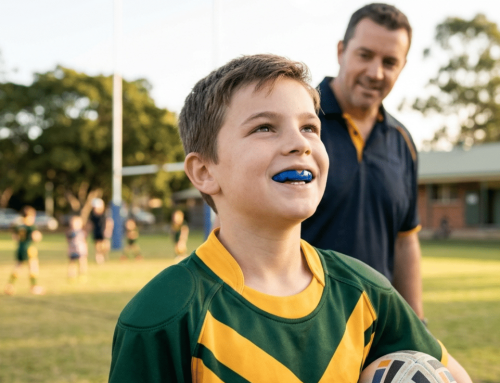
Many of these sports don’t require mouthguards, yet accidental knocks still happen. A stray ball, an elbow in a crowded basketball key or a collision on the touch field can easily chip or knock out a tooth.
Tips for parents this spring:
- Get a custom-fitted mouthguard. Dentist-made mouthguards offer the best protection and comfort. Kids are more likely to wear them because they fit properly and don’t make talking or breathing difficult.
- Check older mouthguards. Growing children often outgrow a mouthguard within a season. A poor fit reduces protection.
- Pack a dental first aid kit. Include gauze, a small container, a long-life milk popper and our phone number. Coaches and team managers will thank you.
- Know what to do. Share the knocked-out tooth steps above with your child’s coach or team manager.
- Book a check-up after any knock. Even if a tooth looks fine, injuries can affect the nerve and show up later as discolouration or pain.
For eligible families, children’s dental services covered by the Child Dental Benefits Schedule (CDBS) are bulk-billed at Road Dental. That makes preventive care and check-ups more accessible.
Getting Same-Day Emergency Dental Care at Road Dental in Greenslopes
At Road Dental, we know dental emergencies can’t wait. That’s why we keep time slots open every day for patients with severe toothache, broken teeth and sports injuries.
Here’s what you can expect:
- Priority appointments: Emergency slots are reserved daily, so you can be seen quickly.
- Six days a week: We are open Monday to Friday from 8:00 am to 5:30 pm, and Saturday from 8:00 am to 12:00 pm.
- After-hours visits: These are available by appointment.
- Gentle, clear care: Our team explains every step so you feel informed and in control, even in a stressful moment.
- Comprehensive treatment in one place: From fillings and root canals to crowns, bridges and extractions, we can manage your care from the emergency visit through to the final repair.
You’ll find us at 635 Logan Rd, Greenslopes QLD 4120, with easy access for patients across Greenslopes, Coorparoo, Holland Park, Annerley, Tarragindi and surrounding suburbs.
When you call, it helps to tell us:
- What happened and when
- Which tooth or teeth are affected
- Whether there is pain, bleeding or swelling
- Whether you have the broken piece or knocked-out tooth
Preventing Broken Teeth Once the Emergency Is Over
Once your tooth has been repaired, a few simple habits can help you avoid another emergency:
- Wear a mouthguard for sport. This applies to training as well as games.
- Protect against grinding. If you clench or grind your teeth at night, an occlusal splint can prevent cracks and wear.
- Avoid chewing hard objects. Ice, pen lids, hard lollies and popcorn kernels are common culprits.
- Don’t use your teeth as tools. Opening packets or bottles with your teeth is a fast way to chip them.
- Keep up regular check-ups and cleans. Your dentist can spot weak fillings, small cracks and early decay before they turn into breaks.
- Treat decay early. Teeth weakened by cavities are far more likely to fracture.
- Look after restored teeth. Crowns and root-canal-treated teeth are strong but still need good brushing, flossing and regular reviews.
Final Thoughts
A broken tooth is stressful, but knowing what to do makes a real difference. Here are the key points:
- Stay calm, control bleeding and keep any fragments in milk.
- Save a knocked-out adult tooth by handling it by the crown, reinserting it if possible and getting to a dentist within the hour.
- Go to hospital for head injuries, suspected jaw fractures, uncontrolled bleeding or swelling that affects breathing.
- See an emergency dentist for chips, cracks, breaks and severe pain.
- Protect your family’s teeth this spring with custom mouthguards and regular check-ups.
If you or a family member has a broken, cracked or knocked-out tooth, don’t wait. Call Road Dental on (07) 3397 3999 or book online for same-day emergency dental care in Greenslopes. Our friendly team will get you out of pain and back to smiling.



Leave a Comment