

School holidays have a way of filling up fast. Between camps, sport, catch-ups with cousins and at least one day where nobody leaves the house, the calendar disappears before you have had a chance to plan it. Yet the holidays are also the single easiest window in the year to tick off your child’s dental check-up, and most parents only realise it once the term has already started again.
This guide is written for Greenslopes and nearby Brisbane families who want to get it sorted without the stress. We cover why holiday appointments work so well, how often kids actually need to be seen, what happens in the chair, whether your family qualifies for the Child Dental Benefits Schedule, and how to help a nervous child feel calm about the whole thing.
If you are searching for a children’s dentist Greenslopes families can rely on year after year, this is the practical version, not the lecture.
Why School Holidays Are the Easiest Time to Book a Children’s Dental Check-Up
The main reason is simple: no class time is missed, and no one has to be rushed from the school gate to the chair.
Holiday appointments also remove the two things that derail most family dental plans, which are timing and mood. A child who arrives calm, unhurried and not halfway through a school day is far more cooperative than one collected early from class.
There are a few other practical advantages:
- You can book siblings back to back. Two or three kids in one visit means one trip, one park, one morning.
- Follow-up treatment is easier to fit in. If a filling or a small repair is needed, there is still holiday time left to schedule it.
- Mid-morning slots open up. These are usually the hardest times to get during term.
- The routine reset works in your favour. Holidays are a natural time to restart good brushing habits after a slack few weeks.
The catch is that other local families think the same way. Peak holiday times at any Greenslopes dental clinic book out first, so it pays to call a few weeks before the break rather than during it.
How Often Should Children See a Dentist?
The general guidance in Australia is a check-up every six months for most children. Some kids can safely stretch to twelve months, and others benefit from being seen more often, so the honest answer is that six months is a starting point rather than a rule.
Your dentist may suggest more frequent visits if your child:
- Has had decay or fillings before
- Wears braces or a plate
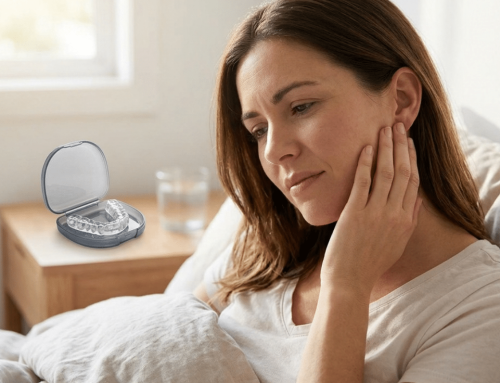
- Grinds their teeth
- Has a high sugar or acidic drink intake
- Struggles with thorough brushing due to age or additional needs
As for the first visit, the widely accepted advice is by the child’s first birthday, or within six months of the first tooth appearing. That early appointment is mostly about familiarity and parent education, not treatment. It also does something valuable long term: it teaches the child that the dentist is a normal, unremarkable place to be.
Two check-ups a year usually lines up neatly with two of the school holiday breaks, which makes the schedule easy to remember.
What Happens During a Children’s Dental Check-Up in Greenslopes
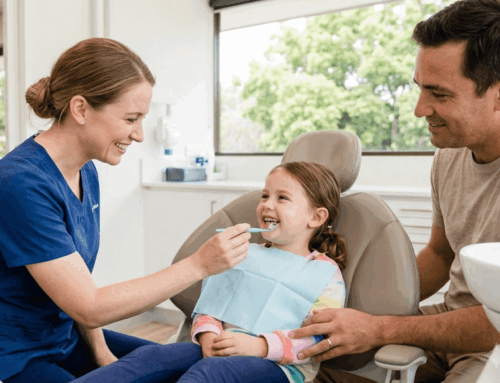
Most parents want to know exactly what their child is walking into. A routine kids dental check-up in Greenslopes is short, gentle and largely conversational.
A typical appointment includes:
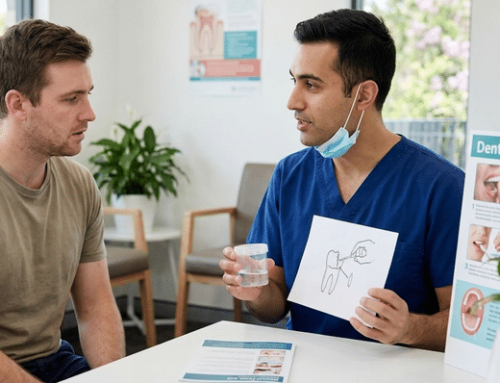
- A chat first. The dentist explains what is about to happen in language the child understands.
- A visual examination. Teeth, gums, bite and jaw are checked for decay, wear, crowding and anything developing under the surface.
- A clean. Plaque and tartar are removed, and stubborn spots are polished.
- Fluoride application, where appropriate, to strengthen enamel.
- X-rays if needed. These are not taken at every visit, only when there is a reason.
- A wrap-up with you. You will hear what was found, what to watch, and whether anything needs booking in.
The whole thing usually takes around thirty minutes. For young children, the first appointment or two may be even shorter, because the goal is comfort before completeness.
At Road Dental, we take time to explain findings in plain terms so you leave knowing not just what was found, but why it matters and what to do next.
Is Your Child Eligible for the Child Dental Benefits Schedule?
The Child Dental Benefits Schedule, usually shortened to CDBS, is a federal government program that covers a capped amount of basic dental services for eligible children over a two calendar year period.
Broadly, a child may be eligible if they:
- Are aged between 0 and 17 for at least one day of the calendar year
- Receive, or have a family member who receives, an eligible government payment such as Family Tax Benefit Part A
- Are eligible for Medicare
Covered services generally include check-ups, cleans, x-rays, fillings, fissure sealants, root canals and extractions. Orthodontics, cosmetic work and hospital-based dental treatment are not covered.
The benefit cap is indexed, so the exact amount changes. You can confirm both your eligibility and your child’s remaining balance through your Medicare online account via myGov, by calling Services Australia, or by asking us to check for you when you book.
Road Dental bulk-bills treatments covered under the schedule, which means eligible families can complete a check-up and clean with no out of pocket cost. If you are not sure whether you qualify, ask. It takes a minute to check and a surprising number of families are eligible without knowing it.
Signs Your Child Needs to See a Dentist Sooner
A six month routine is fine until something changes. Book sooner if you notice any of the following:
- Ongoing toothache, or pain that wakes them at night
- Sensitivity to hot, cold or sweet foods
- White, brown or dark spots on a tooth surface
- Bleeding, red or swollen gums when brushing
- Persistent bad breath that survives a proper brush
- Chewing on one side only, or avoiding certain foods
- A knocked, chipped or loose tooth after a fall or sport
- Adult teeth coming through behind or beside baby teeth
Two of these deserve extra attention. Dark spots often mean decay has already begun, and pain that keeps a child awake rarely settles on its own. A knocked out adult tooth is a genuine dental emergency, and the first thirty minutes matter enormously, so call straight away rather than waiting for morning.
Helping an Anxious Child Feel Comfortable at the Dentist
Dental anxiety is common, and it is often learned rather than born. Children pick up far more from a parent’s tone than from anything said directly.
What tends to help:
- Keep your own language neutral. Avoid words like hurt, needle, drill and pain, even in reassurance. “It won’t hurt” plants the idea of hurting.
- Book a morning slot. Tired children have thinner patience.
- Do a short practice run at home. Count their teeth with a toothbrush and let them do it back to you.
- Bring something familiar. A toy, a favourite jumper, headphones for older kids.
- Let the dentist lead. Kids often behave better when a parent hovers less.
- Praise the visit, not the result. Reward turning up, not the absence of cavities.
Avoid promising that nothing will happen, because if something does need doing, trust takes a hit. It is better to say the dentist will look first and explain everything before anything else happens.
Our team sees nervous children regularly, and we work at the child’s pace. Sometimes the first visit is only a ride in the chair and a look in a mirror, and that is a completely acceptable outcome.
Common Mistakes Parents Make With Kids’ Dental Care
Most of these are honest oversights rather than neglect.
- Assuming baby teeth do not matter. They hold space for adult teeth, and decay in them can affect what comes through underneath.
- Waiting for a complaint. Early decay is painless, which is exactly why check-ups exist.
- Stopping supervision too early. Most children need help or checking on their brushing until around age eight.
- Rinsing with water straight after brushing. This washes the fluoride away. Spit, do not rinse.
- Treating juice and sports drinks as harmless. Frequency of exposure matters more than quantity.
- Brushing immediately after acidic food or drink. Wait about thirty minutes so softened enamel is not scrubbed.
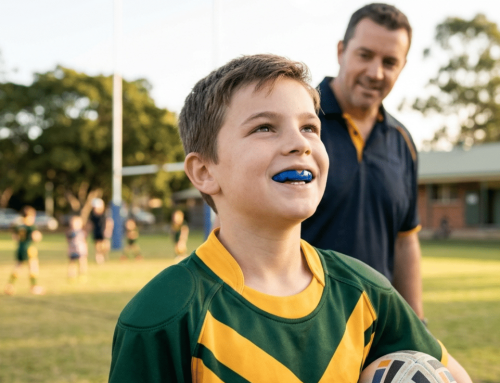
- Skipping the mouthguard. A custom fitted mouthguard costs far less than repairing a broken front tooth.
Building Good Oral Hygiene Habits Between Check-Ups
The six months between appointments do most of the actual work. A simple routine, done consistently, beats an elaborate one done occasionally.
The daily basics:
- Brush twice a day for two minutes with a fluoride toothpaste suited to their age
- Floss once daily, from the point where teeth start touching
- Spit rather than rinse after brushing
- Replace toothbrushes every three months, or sooner if bristles splay
Making it stick:
- Brush together so it looks like a family habit rather than a punishment
- Use a two minute song or timer for younger children
- Let them choose the toothbrush colour, since small ownership goes a long way
- Keep water as the default drink and treat juice as an occasional extra
- Offer cheese, plain yoghurt, nuts and crunchy vegetables as tooth-friendly snacks
For older kids and teenagers, the challenge shifts from ability to motivation. Framing it around appearance, breath and sport performance tends to land better than lectures about decay.
Booking Your Child’s Holiday Check-Up at Road Dental in Greenslopes
Road Dental has looked after Greenslopes families for more than a decade, and we know the rhythm of a school holiday appointment: get in, get it done properly, get on with the day.
What you can expect with us:
- Gentle, unhurried care from a team your children will recognise each visit
- Clear explanations of what we found and what, if anything, needs doing
- Bulk-billed treatment for services covered under the Child Dental Benefits Schedule
- Sibling appointments scheduled together where possible
- A convenient Greenslopes location at 635 Logan Rd with easy access and parking
We also provide children’s dentistry, custom mouthguards for winter sport, occlusal splints for grinding, fillings, extractions and emergency dental treatment when something goes wrong at the worst moment.
In short: book two check-ups a year, use the holidays for at least one of them, check your CDBS eligibility before you assume it will cost you, act early on pain or dark spots, and keep the daily routine boringly consistent. That combination prevents the large majority of childhood dental problems.
Holiday appointments fill quickly, so the sooner you lock in a time, the better the slot you will get. Call Road Dental on (07) 3397 3999 or book online to secure your child’s school holiday check-up in Greenslopes.



Leave a Comment